
Have you ever had a bake or a cooking experience go awry? Yeah, me too. Guess what? You learned something! I mean, don’t get me wrong, when it goes really awry, it can be frustrating, saddening, and annoying. You spent all this time on making a thing, and maybe it’s inedible, or slightly burned, or over-salted, or looks horrible. But, when things don’t go how we expect, it means we learn something. It means we can try again, and look at what we did, or our tools, and find out how to make it better the next time.
This happens to me a lot when I bake. I’ve definitely made some meals that weren’t great, but baking is the tricky one. Cooking is…fluid. More natural to me. Add a bit of this, a bit of that, maybe read up on the best way to cook meat, but I get the basic principles. It’s easier for me to throw something together. I know not everyone has that skill, but this is why I started this blog! I wanted to share what I’ve learned, and what I continue to learn every day.
Baking…oh, baking. That fickle little chemistry experiment. I’ve made so many cookies and cakes, but I’m still learning, as Mary Berry likes to say. Just because I’ve made my chocolate chip cookies a million times, doesn’t mean I understand why they turn out the way they do. So – I’m still learning, especially about bread. So let’s talk about bread.
What is Bread?
[Enter Raven, wearing her food historian cap.]
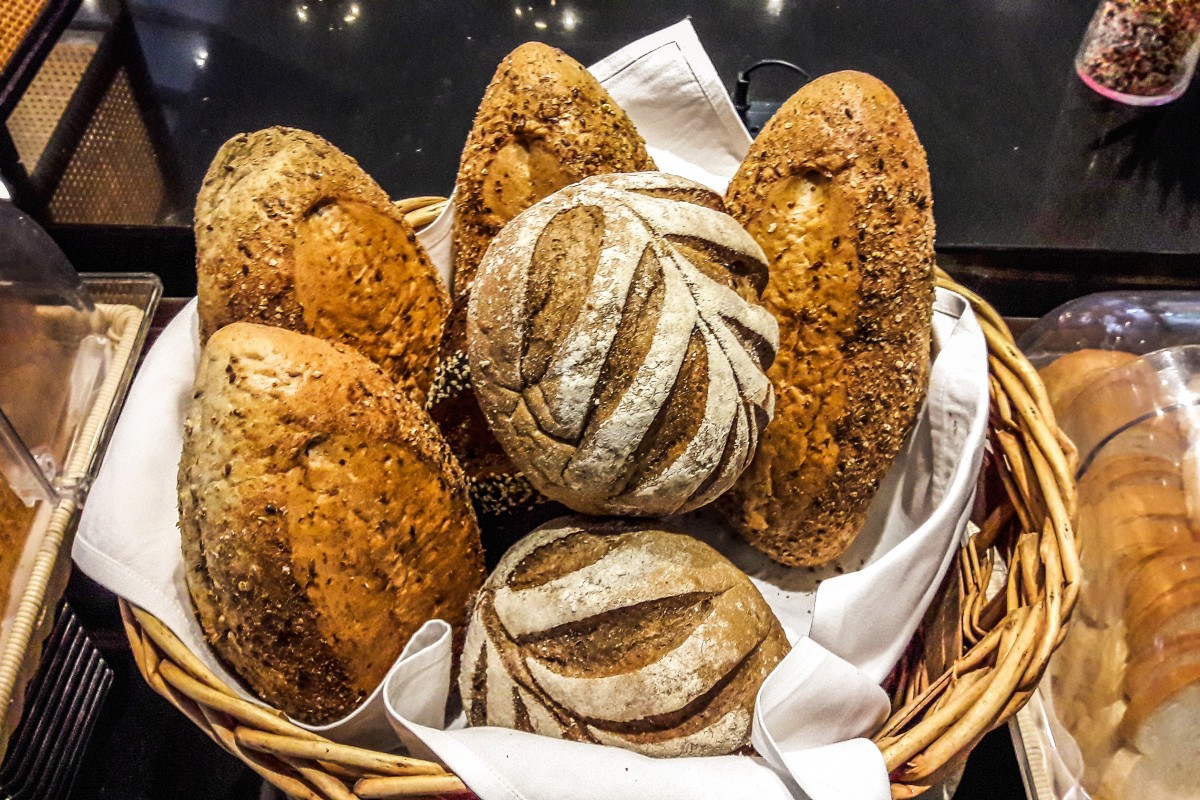
Bread is a product of a dough made from flour and liquid, in it’s most basic form, though the discovery of yeast through the fermentation process is what has made bread the most interesting powerhouse food. We’ve found evidence of breads being made as early as 30,000 years ago, tens of thousands of years before cultivating wheat was the main way of producing bread, and tens of thousands of years before fermentation was being used in food, as far as we can find.
The flour can take many forms: wheat, spelt, rye, nuts, seeds, corn… and each has it’s own amazing properties. They all have different gluten levels (or none at all), which can affect the structure, or density, of the bread. They all have their own flavor profiles, and, their own abilities to make amazing, springy, chewy, crusty, flavorsome loaves full of gluten or gluten-free goodness.
The liquid used also changes the bread. Typically water, you can also use milk, buttermilk, yogurt, beer, eggs, sparkling water…but the first reason we add a liquid is to form a paste/dough that can be cooked on a heat source. Any other qualities of the liquid will change the final product, including keeping the leavening agent from working, the taste, and the texture.
Speaking of leavening agents – obviously, the oldest form of this is yeast! Yeast is actually a naturally occurring microorganism that can, quite literally, be found by mixing flour and water and letting it sit – or ferment – over time. This is how sourdough is made. The microorganisms need to eat, after all, and the proteins and sugars that naturally occur in foods are very tasty, causing these organisms to multiply, and their waste from all this eating, is gas – carbon dioxide, just like us! Since gas can be trapped, when you put it in a flour/liquid mixture, you get bubbles – and thus, rise – from your bread. Commercially, yeast comes in many forms, for different kinds of things: bread, wine/distiller, beer, nutritional. Other ways of leavening bread are by creating a chemical reaction with an acid and an alkaline, such as vinegar and baking soda, or baking powder and sparkling water.
So, that’s the basics of bread. Now, how does it go wrong? Let’s look at a few ‘case studies’ from my own kitchen.
BREAD PITFALLS
OVER BAKING
I think there’s something wrong with my oven. No, really.
It doesn’t seem to matter what bread I’m baking, everything always darkens too much before it’s baked inside. Even quick breads, like zucchini bread, get a little over done on the bottom. I’ve mostly gotten around this by putting an extra pan on the lowest rack to block some of the heat. But this doesn’t really work very well – even, sometimes, for cookies.
I’ve looked into figuring out how to adjust the temperature of my oven, but since I live in an apartment, and the model of oven is too old to find the manual online, so my resources are limited. I’m hoping if I take a stab at it, it will help. (But I’ll let you know how that works out!)
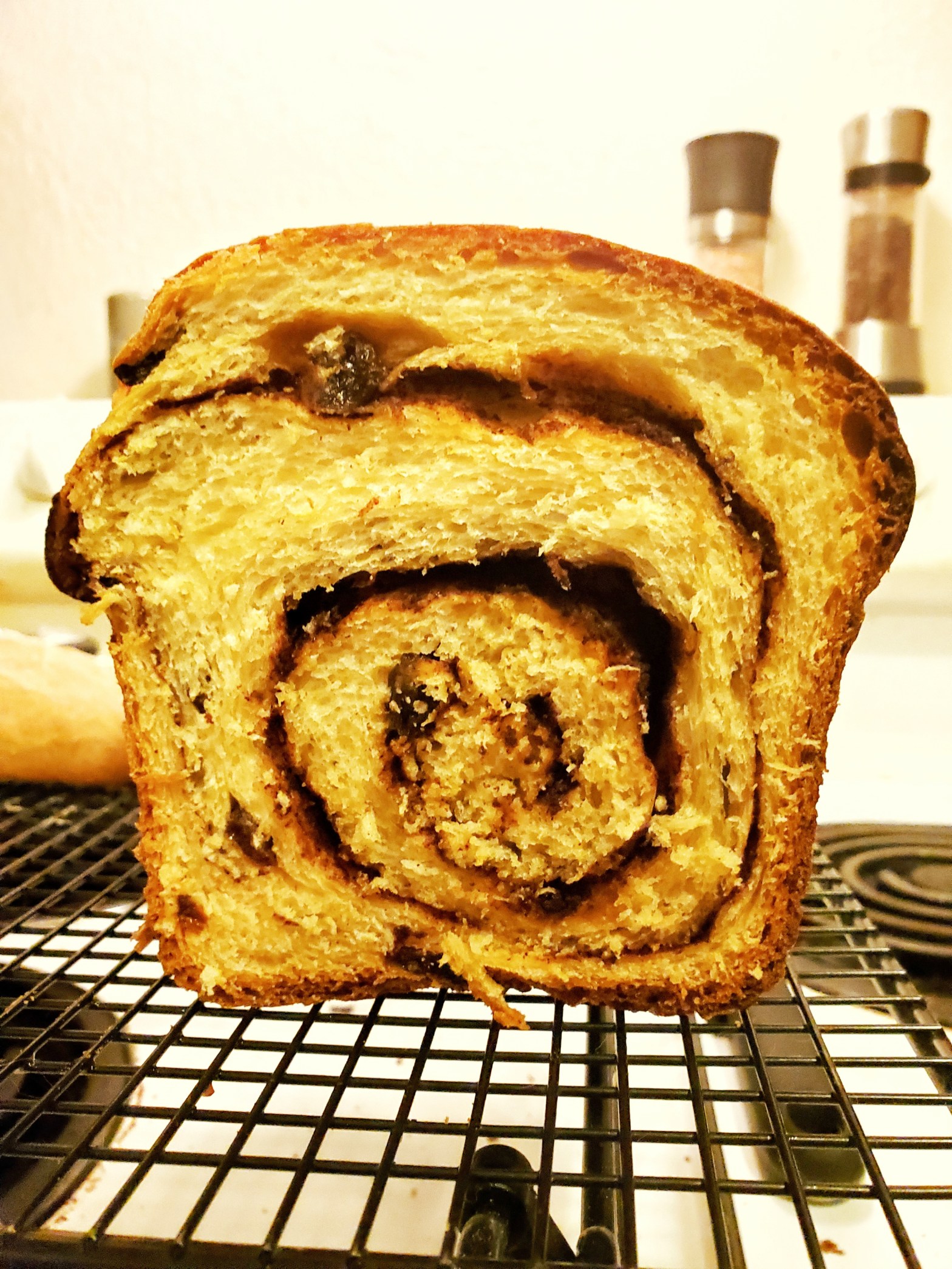
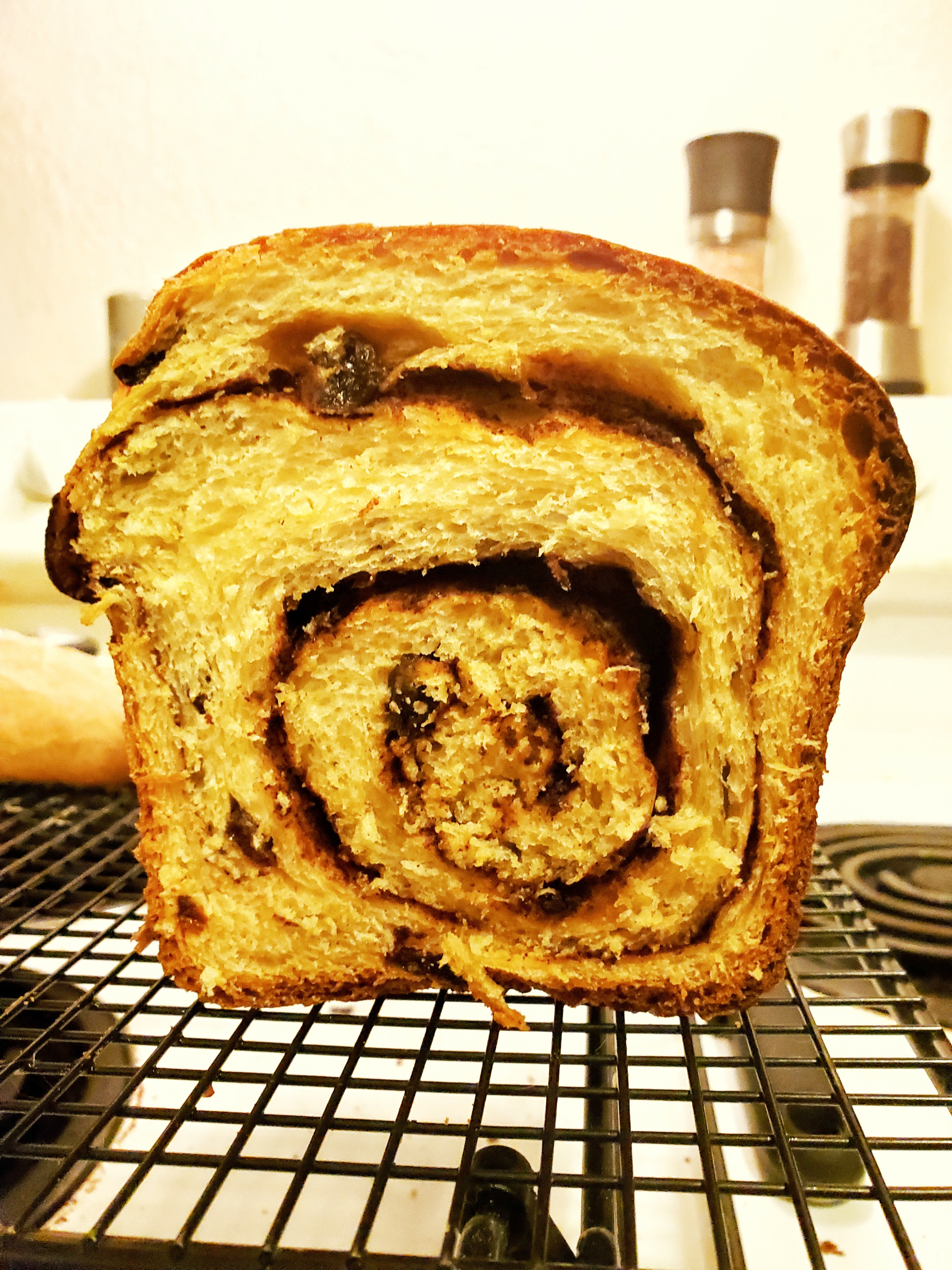
As you can see from this cinnamon swirl bread from The Pioneer Woman (which was delicious, by the way), the crust on it is very dark, which in of itself isn’t the only indicator that it’s burned, but look at the cross-section: the dark brown on the edge is too thick. The middle is near perfect – irregular holes, soft, fluffy – didn’t turn back to dough when I poked it, which is always a good sign. The only bad this has that as I cut nearer the center, the gaps from the cinnamon swirl began to get rather bigger (but that’s another issue I’ll discuss later).
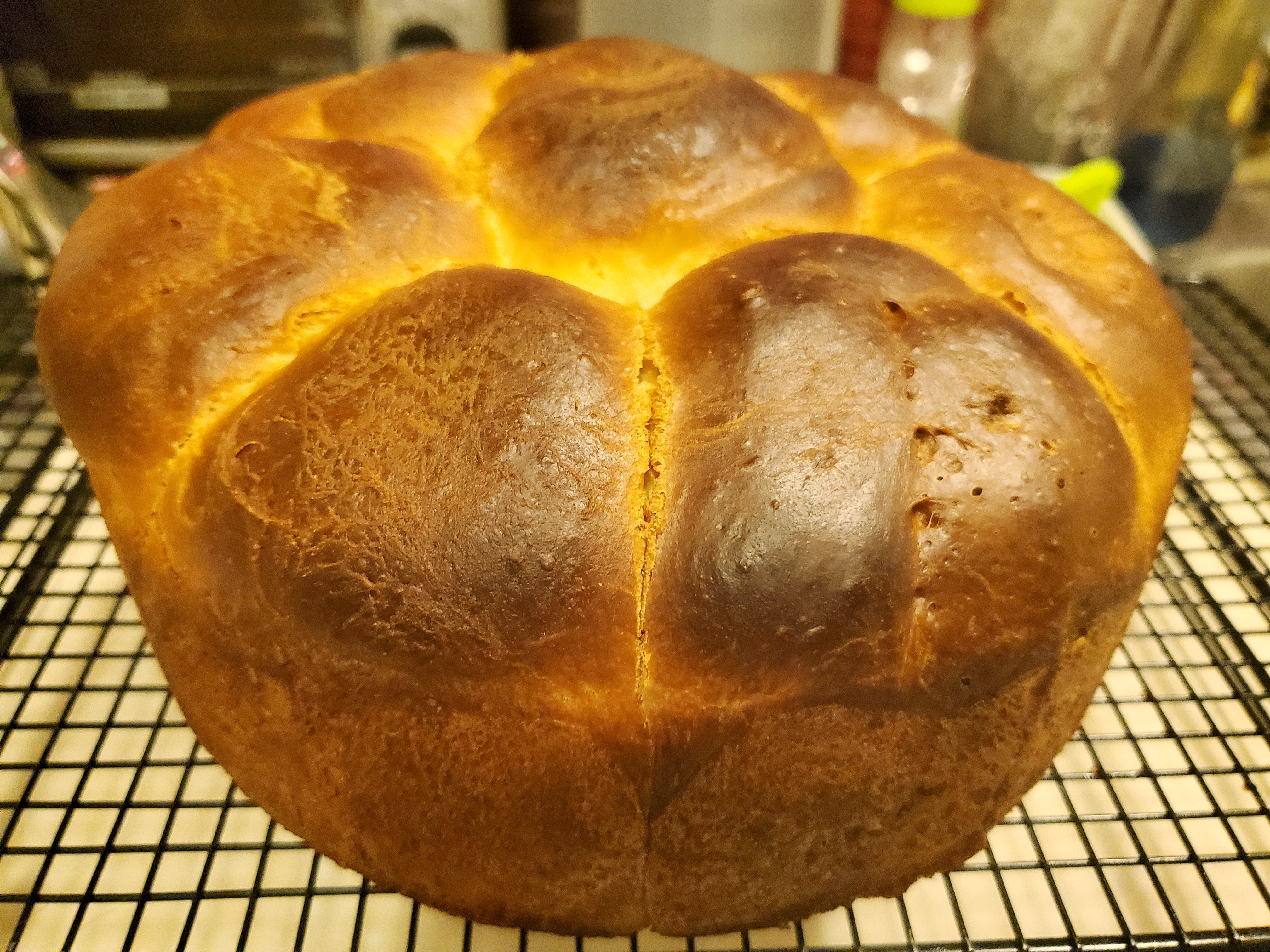
This also happened to this brioche I made a week or two earlier:
And this cobbled loaf (which was ALSO delicious):
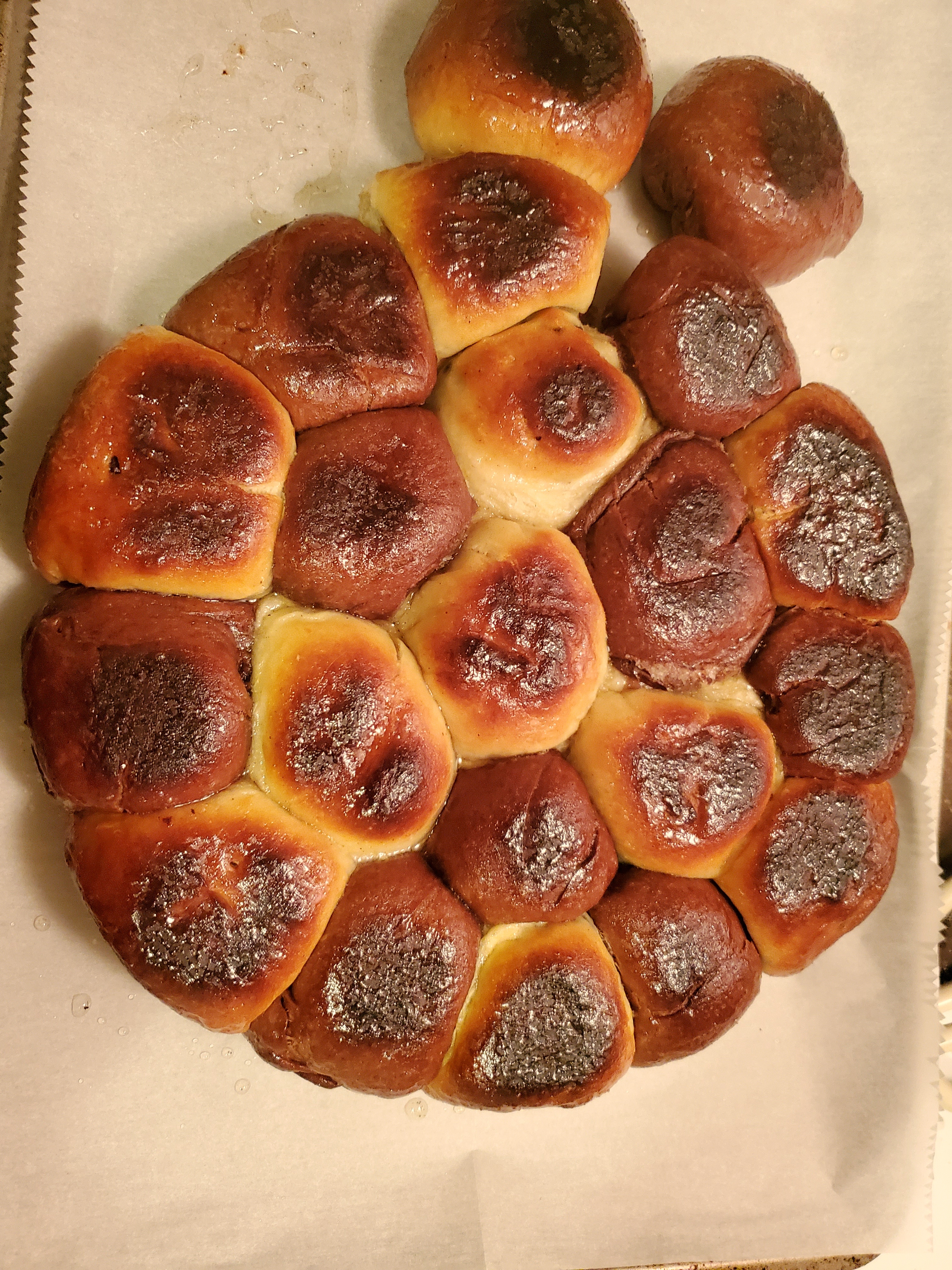
I honestly shouldn’t have followed the directions to flip the bread and bake it upside down. I’m not exactly sure what that purpose was, anyway, since it would squish the puffy top, but I did it any way, and burned the tops of the little buns. :( It was super-tasty, though! I actually loved the chocolate bread with the white chocolate middle, which I was unsure about, because I only like white chocolate in very small amounts. But there it is – both the bottom and the top were a little crispy, on what was otherwise, a pretty decent bake. Darn oven.
UNDER PROVING
Okay, so this case is one of Raven being a dumb-dumb. I simply misread the recipe.
I was trying to make a replication of The Cheesecake Factory’s brown bread, which they serve as you’re waiting for your food. I think in my brain, I always saw this bread as Pumpernickel, which it is NOT, at all. I’ve had Pumpernickel, so I’m not sure why I thought it was, but anyway, my roommate found a take and bake of The Cheesecake Factory brown bread, and I spent some time trying to figure out the flavor profile, which I had never really paid attention to before. Though, to be fair, I don’t really remember the last time I went to The Cheesecake Factory. I found a few recipes online, and went ahead and tried one. I thought it turned out well, though it wasn’t as dark as I knew it should be (though I think that’s because TCF adds coloring).
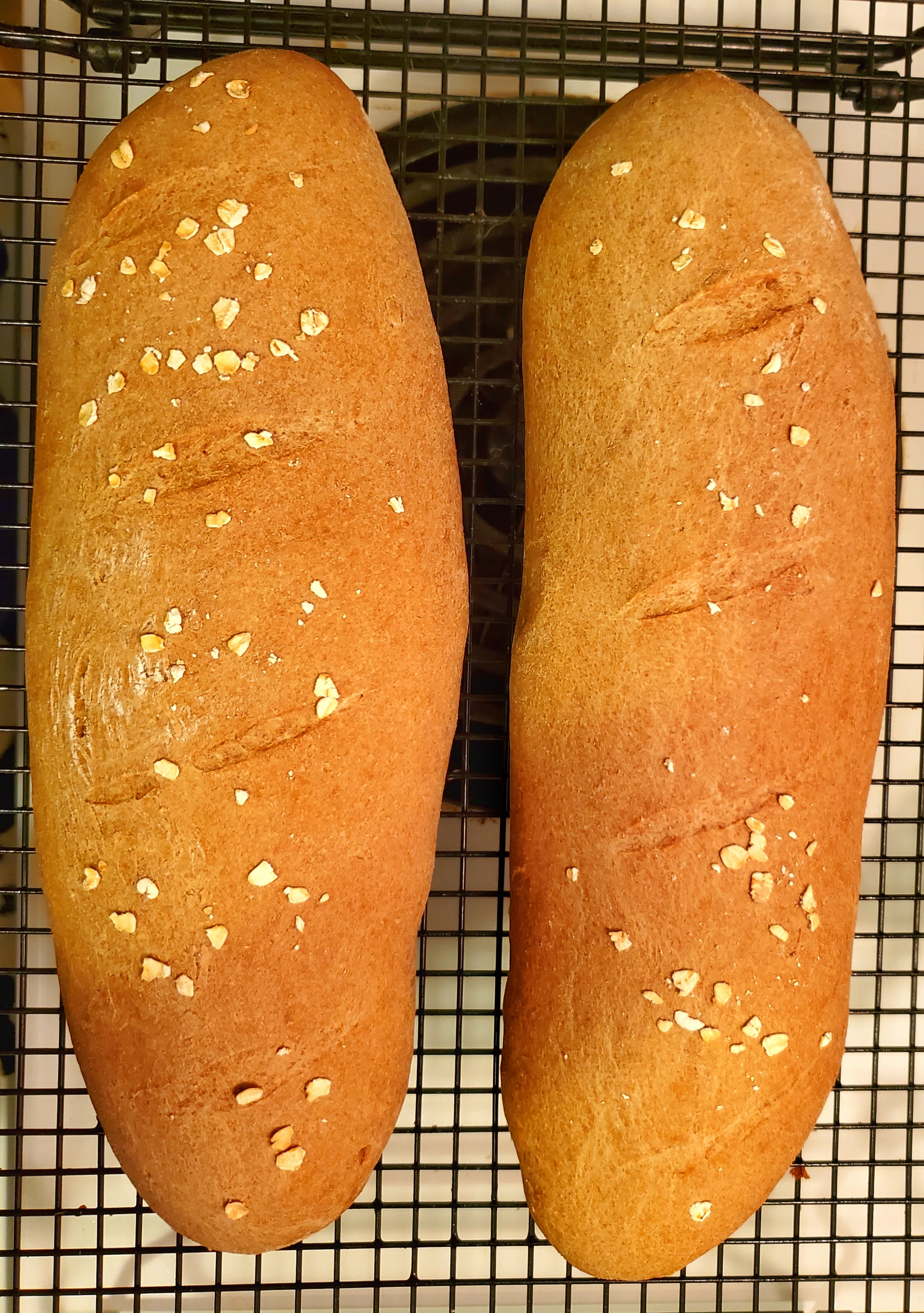
Alas, I was mistaken about how well it’s baked. It tastes about right, BUT, the bottom blew out. D:
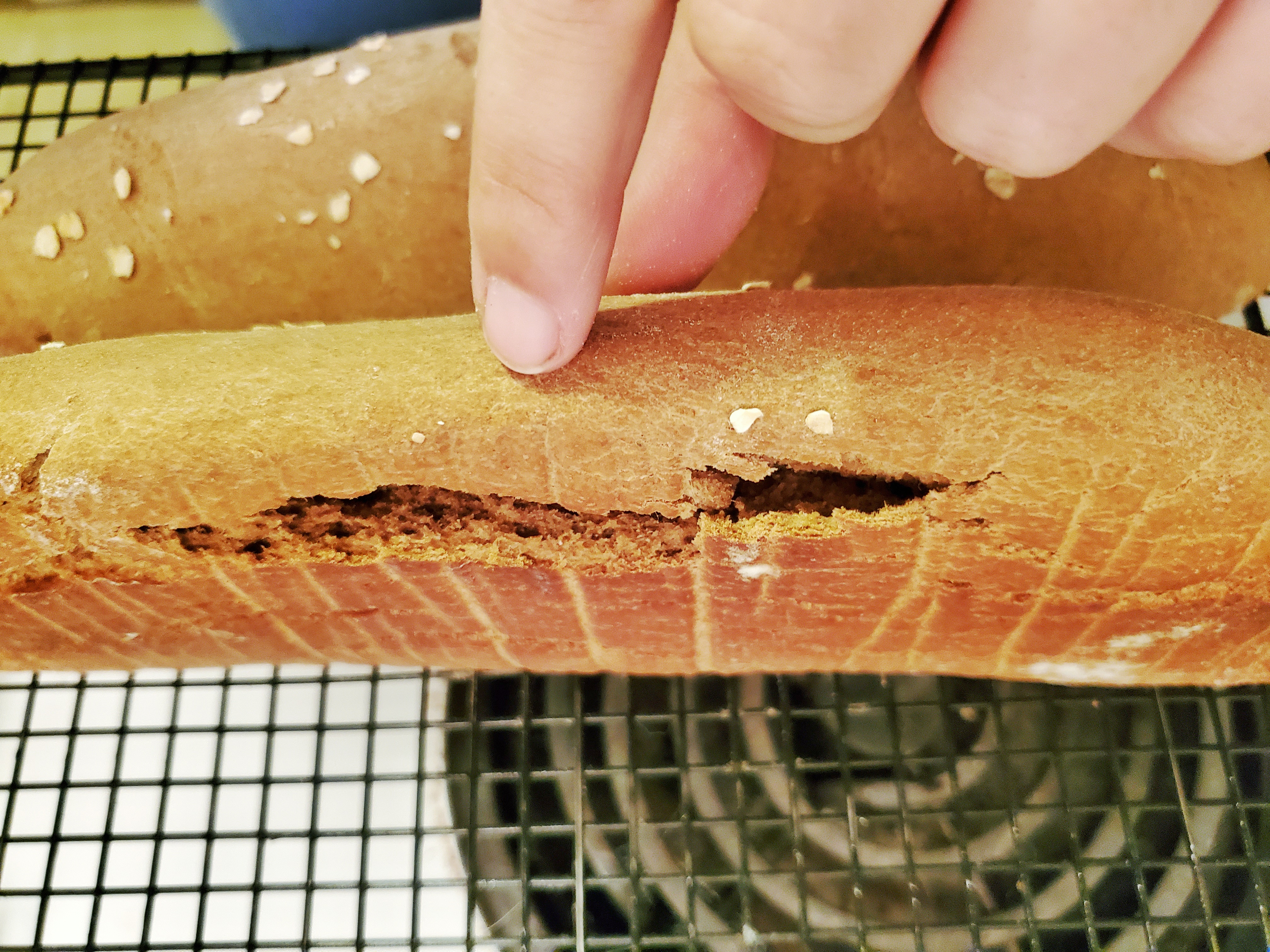
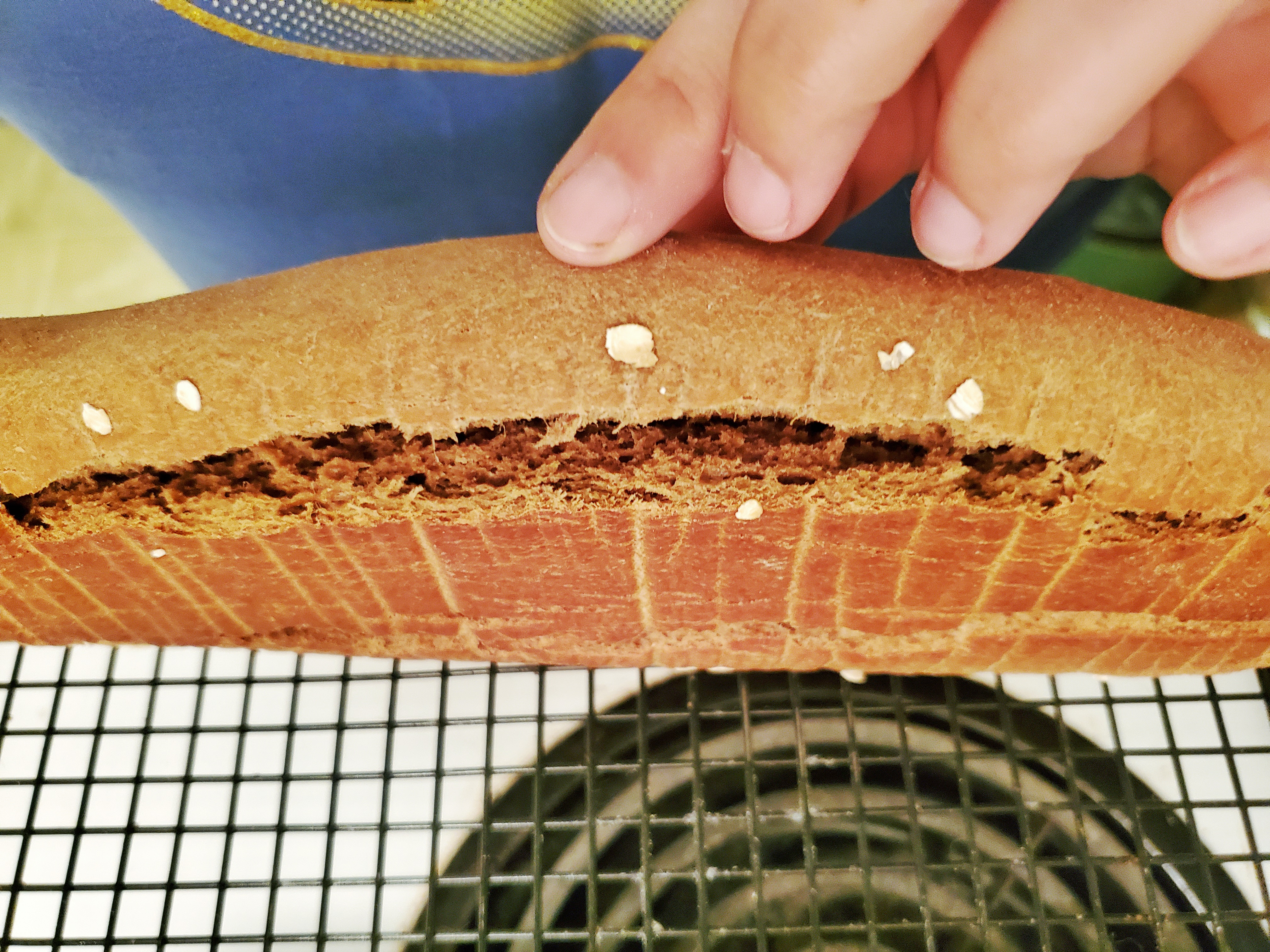
I knew this was an indication of messing up the proving, but I wasn’t sure exactly how, so a quick Google told me that a blow out on bread usually means it was under-proved. Basically, the yeast had quite a bit more work to do, and when I put it in the oven, the skin started to harden, and all that gas from the Yeasty Boys had to go somewhere…so it found the weakest place: the bottom.
I checked the recipe, and it turns out that 30-minute proving time was actually supposed to be TWO HOURS. *facepalm* Well, that explains it! It also explains why it was so dense in the middle.
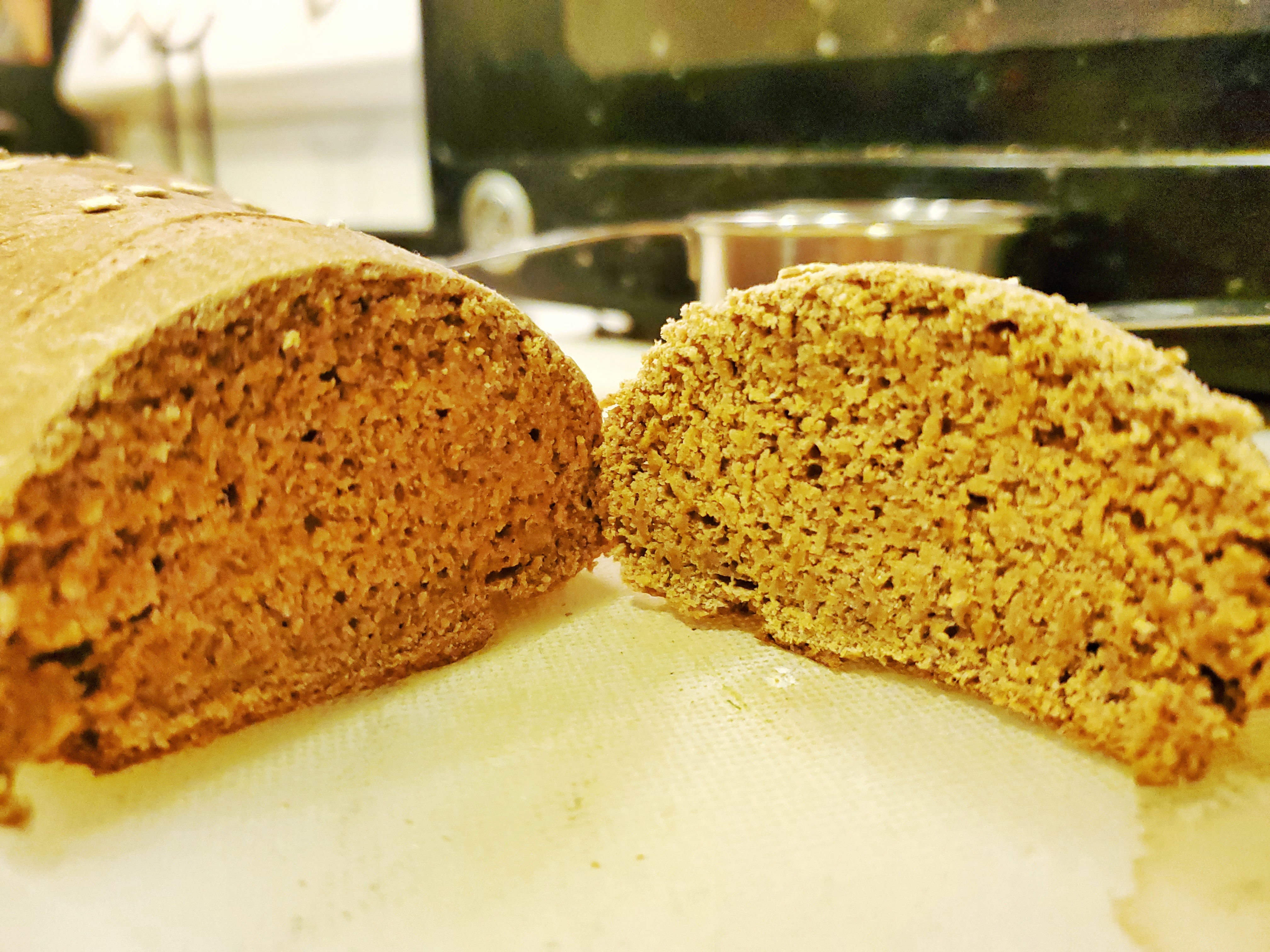
So, I’m going to try this again, swapping the honey out for more molasses, and see if I can keep the taste and get the color I want as well. AND the texture!
NOT ENOUGH ROOM
So, back to that cinnamon swirl bread. The recipe called for a 9″x 5″ loaf pan, which I don’t have. I have an 8.5″x4″. I thought, well, it won’t be too bad…
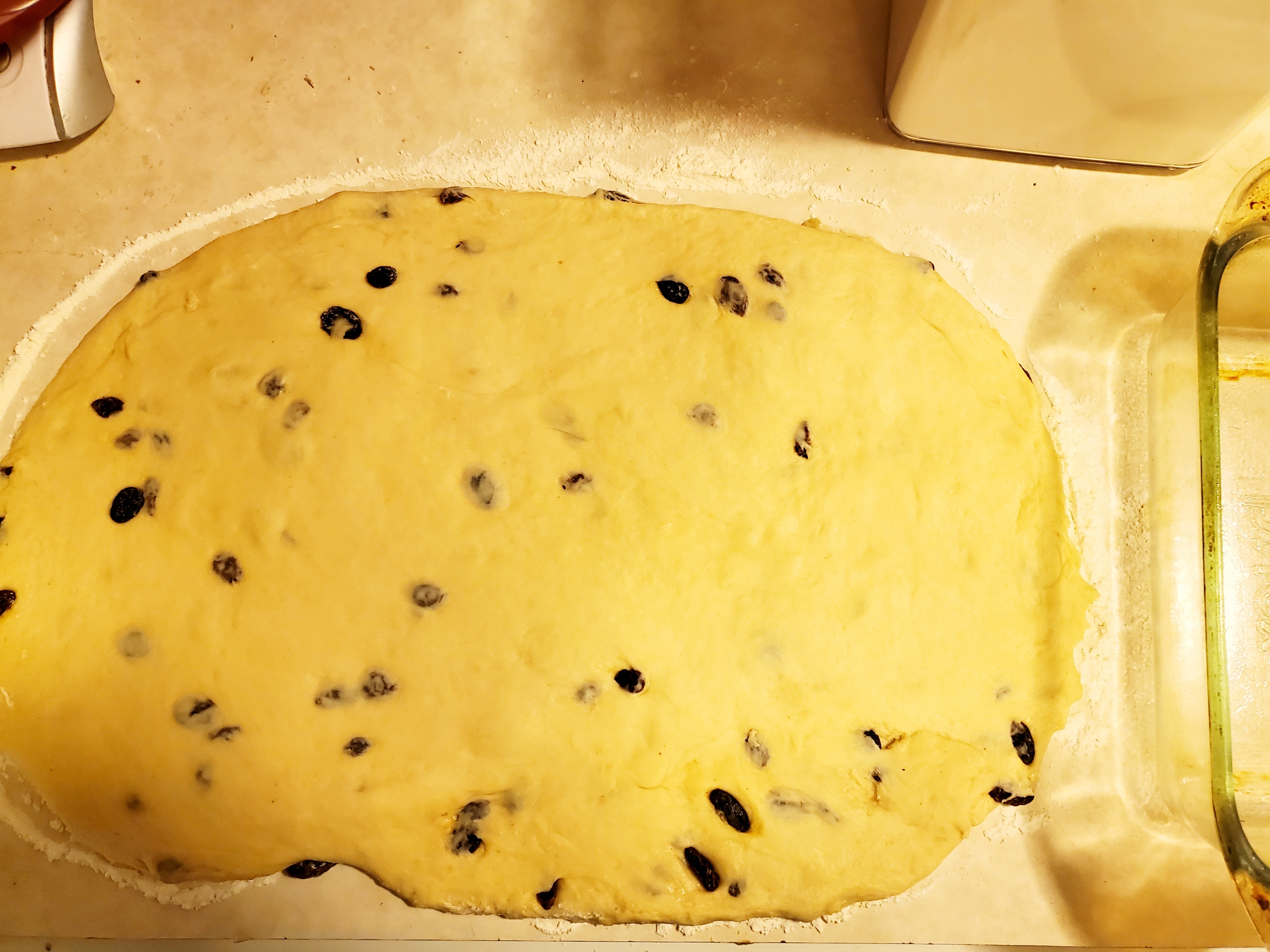
I rolled it out to about the length of my pan, but as I rolled it up into a pretty tight swirl, I thought, and went to put it into the pan, it was clearly too long. :( I had to squish it a bit, like a baklava, to get it to fit.
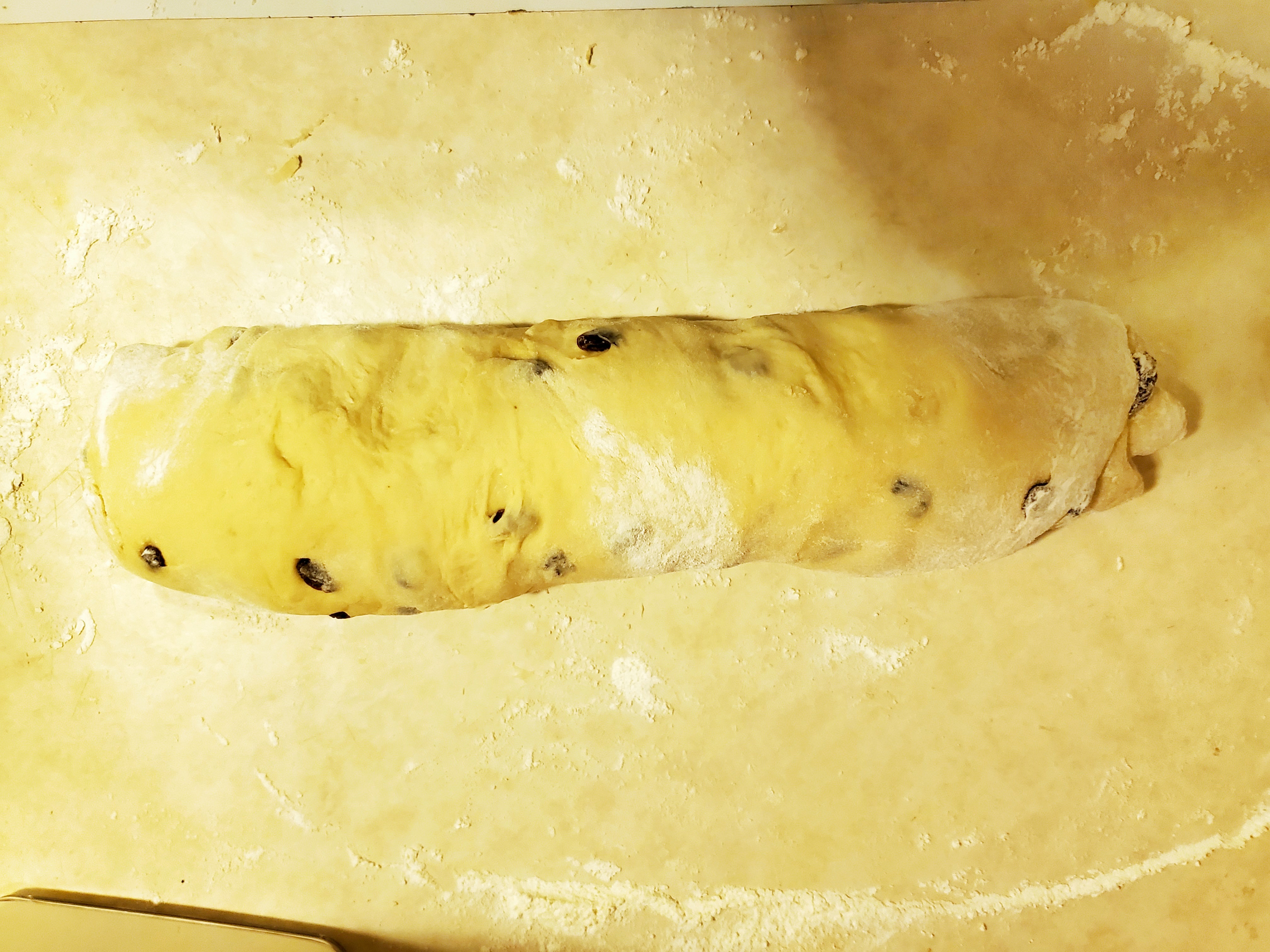
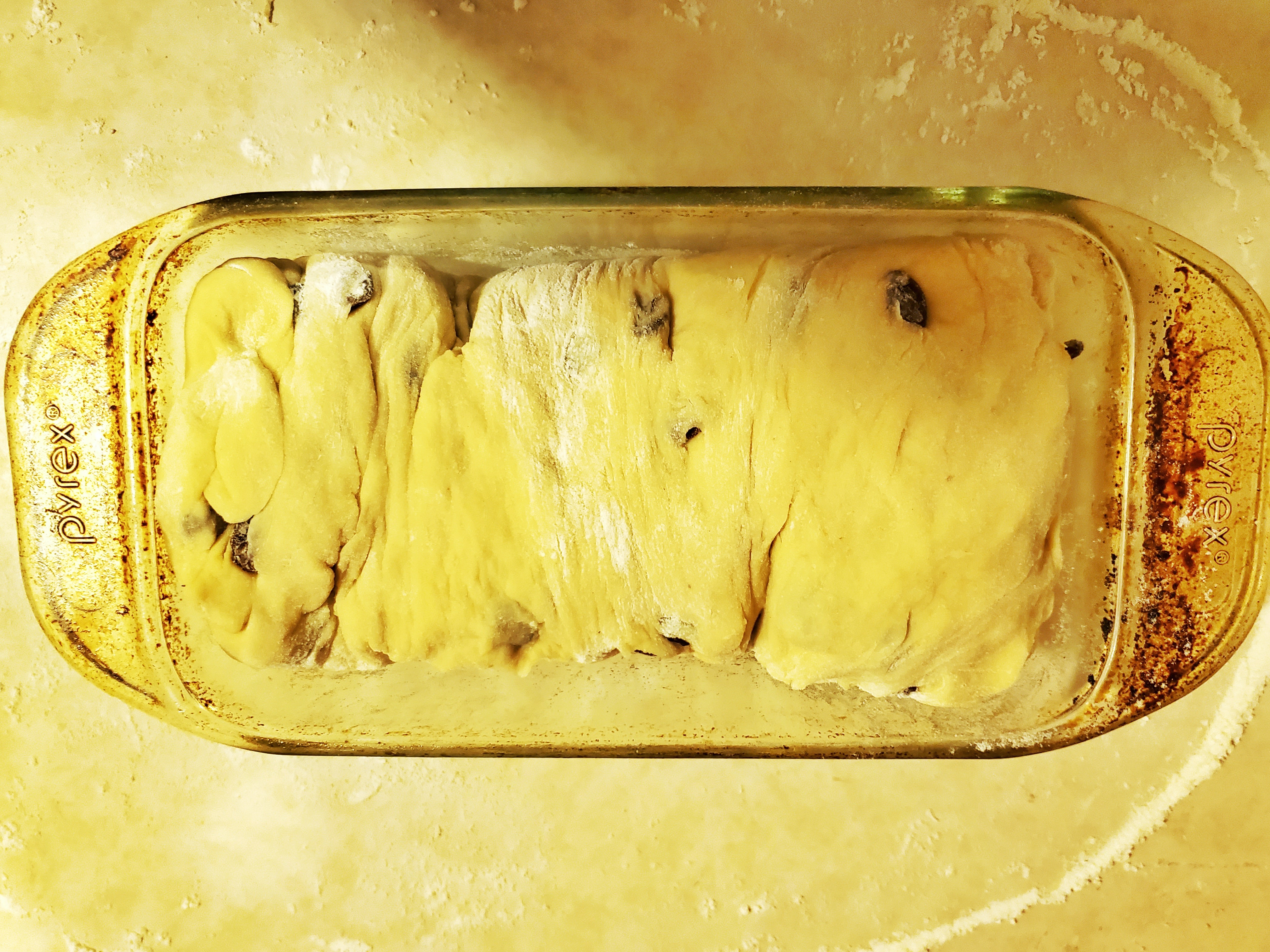
I thought it might be okay, and was happy with the rise:
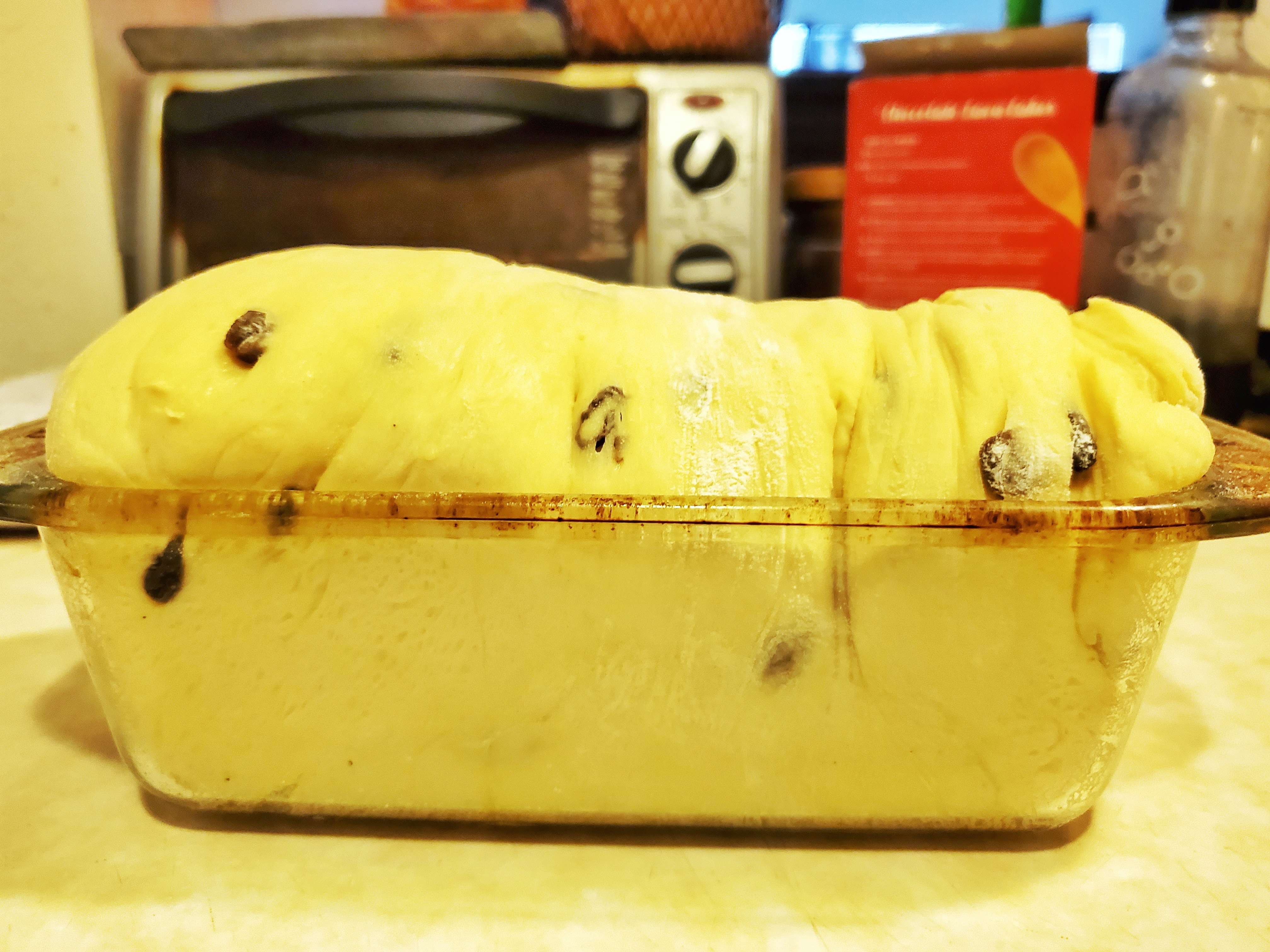
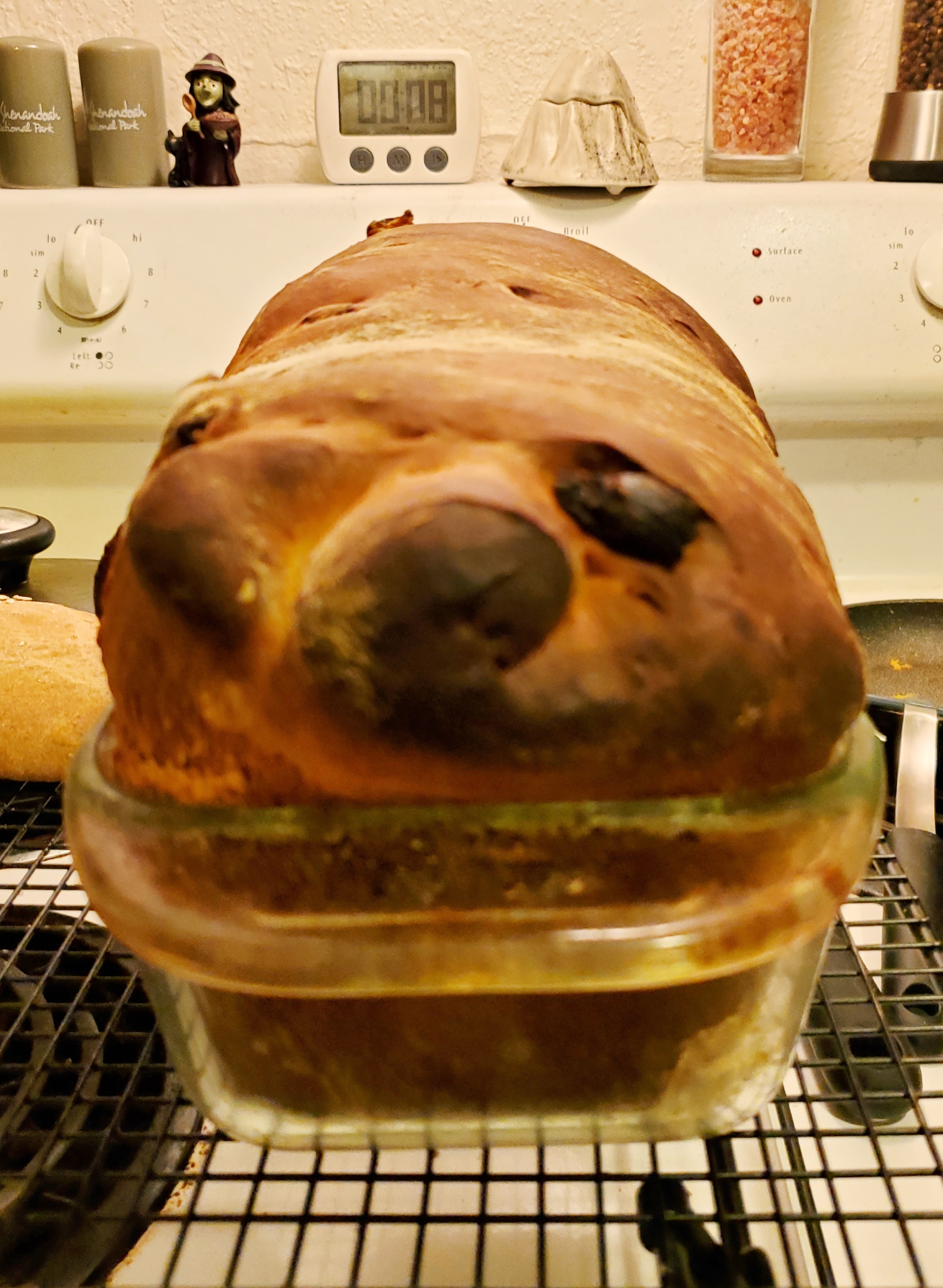
EXCEPT, my bread got SO big, it practically crawled out of the tin – the down-side seam lifting above the edge, and spilling that delicious cinnamon-sugar filling out onto the side of the tin, and down to the pan that was blocking the extra heat.
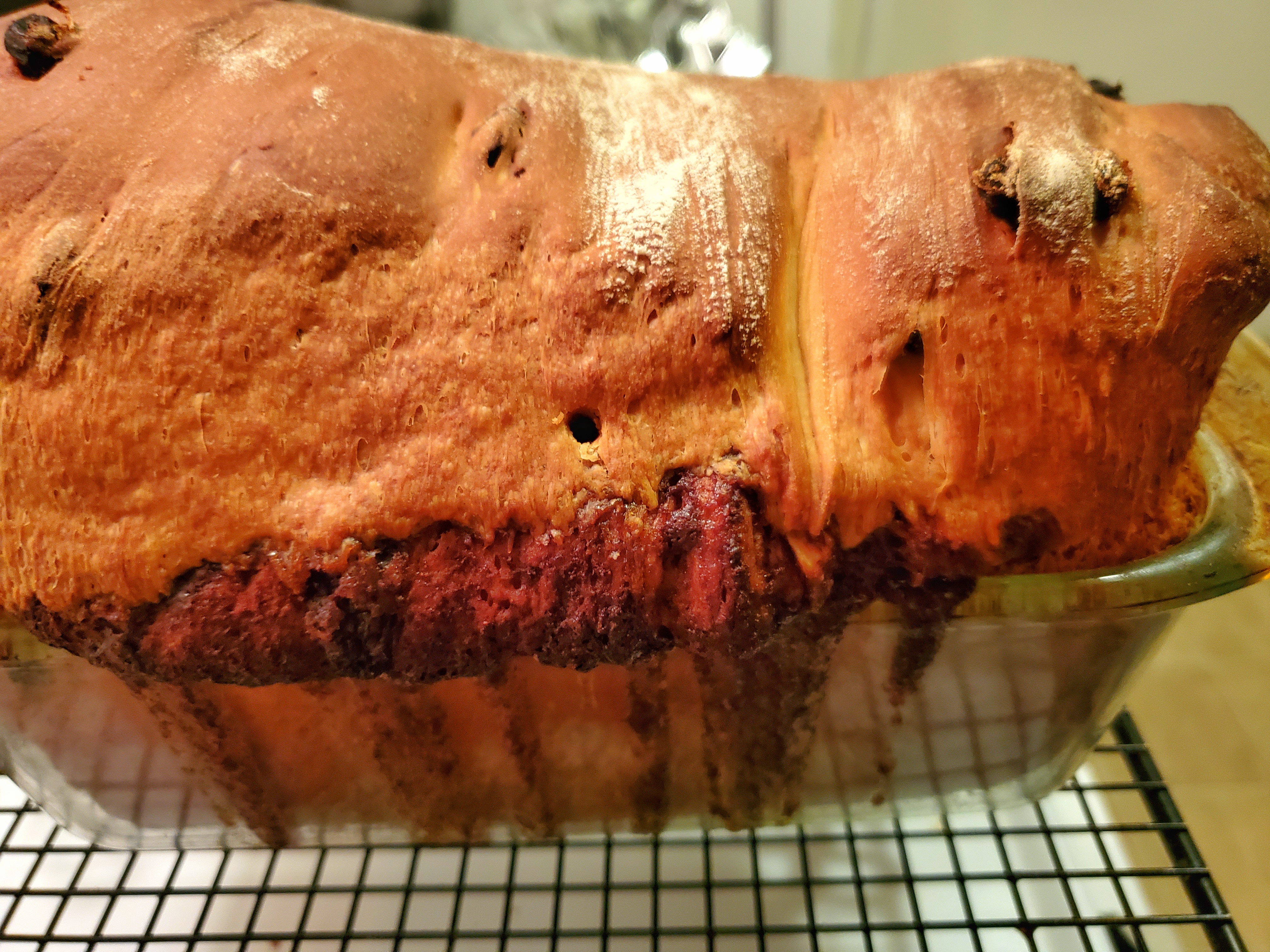
o_________________o
^ That’s my face, as I discovered this issue, and had to keep baking it so it would be edible.
I think next time I try this one, based on the amount of rise I got, I think I might cut the recipe nearly in half, so it will neatly fill the loaf pan I have, and won’t explode out of it. It’s either that, or buy a new tin, but that’s for the future, when I have a kitchen worth photographing. lol.
Anyway, there are many pitfalls to baking, and bread in particular, that I encountered here, but here’s what I learned:
- Read the recipe. Very closely. Before starting. I usually do this, but clearly didn’t this time.
- Know your equipment. I already know that my oven bakes hotter at the bottom, but I still need to find ways to combat this when baking. There’s no way around learning this aside from baking lots of things and seeing what happens.
- Make sure you have what you need. Be it tools, ingredients, time… If you don’t, consider adjusting the recipe to accommodate, or finding a different recipe.
- Learn about the roles of the ingredients in your bake. While I understand the basics of bread, and I’ve learned a TON from watching shows like “The Great British Bake Off”, or reading blogs, such as Joy the Baker, or magazines, like Cook’s Illustrated, I still have a lot to learn when it comes to how adding or changing things in a bake impacts the final result.
So what have you learned? Hopefully, what NOT to do. :) Please leave feedback or share your own baking mishaps below!
 The Crafty Raven